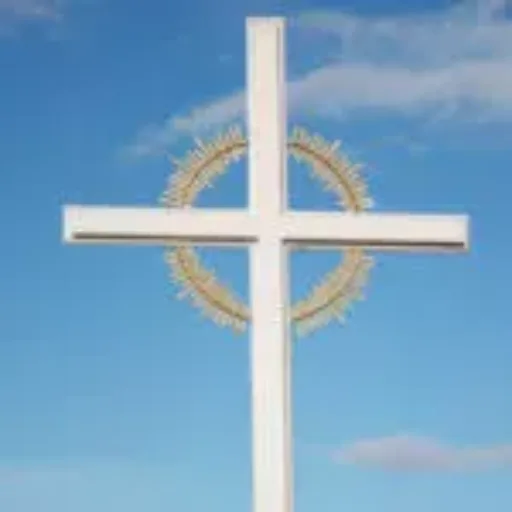
Loughbracken
• Loughbracken.
Loughbracken parish had the following townlands, Balsitric, Caddelstown, Drumgill, Druminshin,
Killadden, Loughbracken, Summerhill Lower and Summerhill Upper. In 1841 there were 659 people in the parish. In 1871 the population was down to 333. (Census of Ireland 1871). Loughbracken means the lake of the speckled landscape. In the Ordinance Survey map of 1836 (revised in 1910) we can see the site of a tiny churchyard with the ruins of a church nearby. Mr. Leo Swan, Archaeologist, in the course of a lecture in the Community Centre in Drumconrath on 21s March 1999 stated that 25 years previously, in an aerial survey of the area he could clearly see the contour line of an inner enclosure and larger circle and in his opinion this may well indicate a Norman enclosure. He also stated that “we know Loughbracken was an early Christian site because there is reference to it in the early texts long before theNorman’s arrived.” In the book “The Great Bog of Ardee” under the heading “The Early Christian Period” (1,650 to 1,200 years ago we find the following statements: “On the top o f a knoll south of the lake (Loughbracken) there are the ruins of a small church, apparently of considerable antiquity. They are situated within a rhomb – shaped enclosure, with sides 50 metres long, defined by an earthen bank.”
Dean Cogan tells us that the old church stood on a hill to the south of Drumcondra and commanded an extensive view of the surrounding country. Of the ancient pastors of Loughbraken we find Rev. William Alexander recorded as Parish Priest of Loughbracken. near Syddan. The old church has been demolished and the ruins are now inconsiderable. (Pat Il Henry IV- who ruled England from 1367 – 1413).
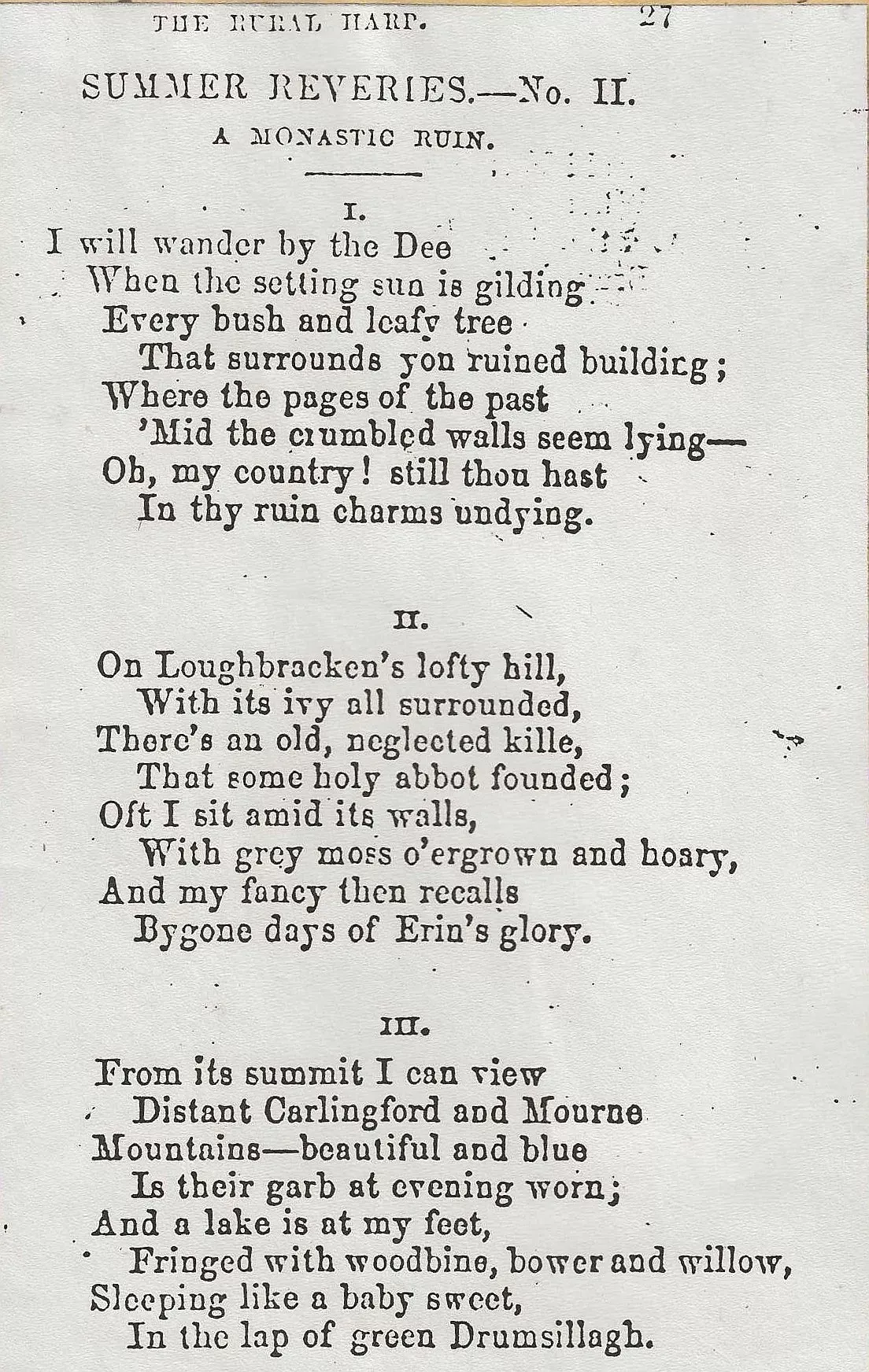
‘In Summer Reveries’ – No II – ‘A Monastic Ruin.’ Paddy Reilly, author of ‘The Rural Harp’ writes
“On Loughbracken’s lofty hill,
With it’s ivy all surrounded,
There’s an old, neglected kille,
That some holy abbot founded;”
Researched and Compiled by Kathleen McArdle, “Brookville”, Drumconrath. Source: Faith History of Drumconrath – Meath Hill.